A slicer of my own.
Slice sequencers never handled MIDI the way I wanted. It was there, but awkward to use. So I started building one for myself: load a sample, cut it into slices, play the slices.
That is where the slicing comes from.
Recast did not start as Recast. It started as a sampler that cut samples into slices, grew engines, lost engines, and found out late what it was for. Eleven stations. Scroll to fly through them.
Slice sequencers never handled MIDI the way I wanted. It was there, but awkward to use. So I started building one for myself: load a sample, cut it into slices, play the slices.
That is where the slicing comes from.
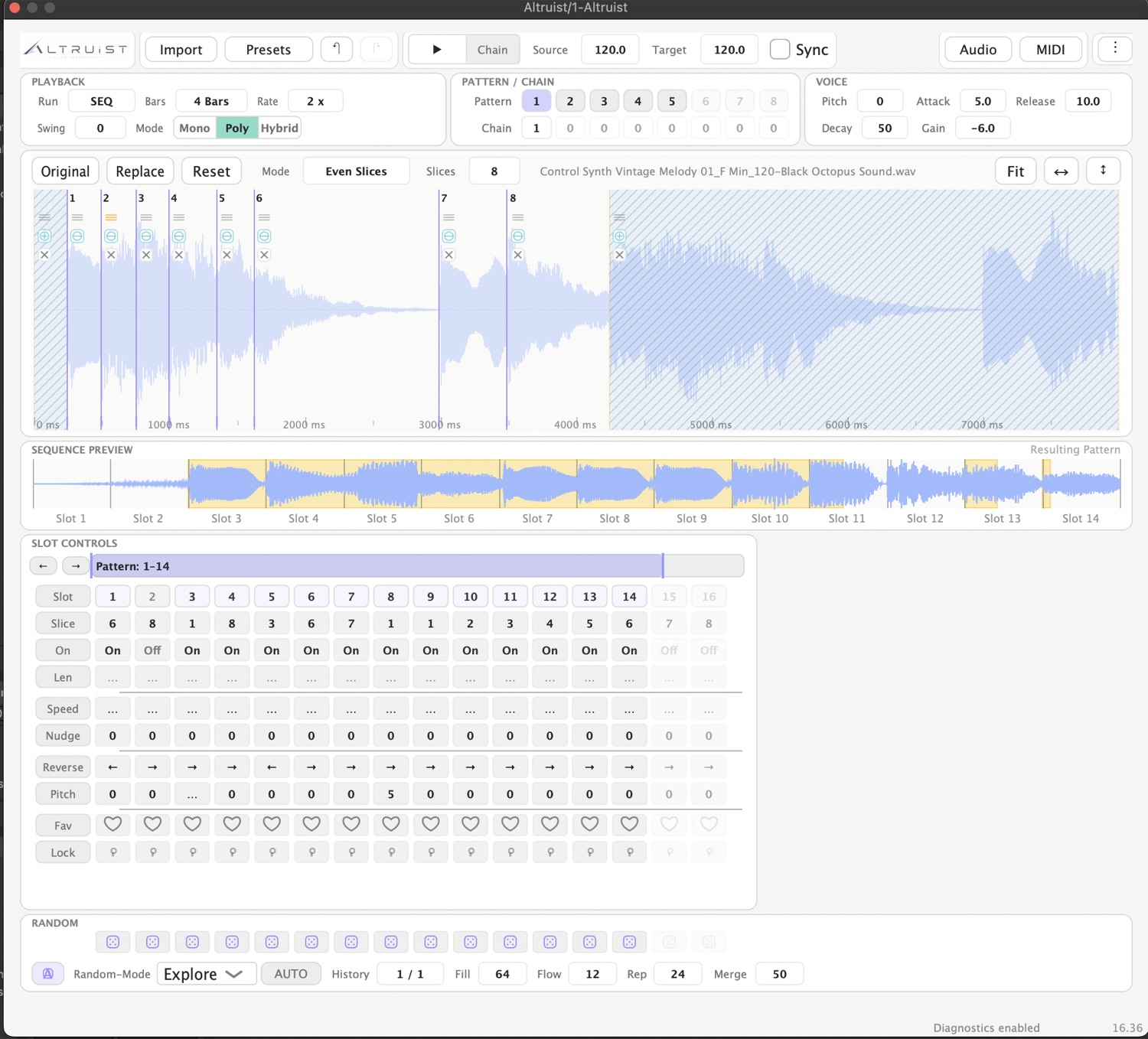
First commit: sixteen steps, a matrix of slots, automatic slicing, a randomize button. Half an hour later it has a name, Altruist.
A slice sequencer.
Pads from one frozen moment of a sample. Arpeggios. Grooves that adapt to the material they are given.
Impressive demo, unclear instrument.
An engine meant to turn any sample inside out. Impossible to pin down, too random to play. It is taken out again.
Random is cheap. Musical is expensive.
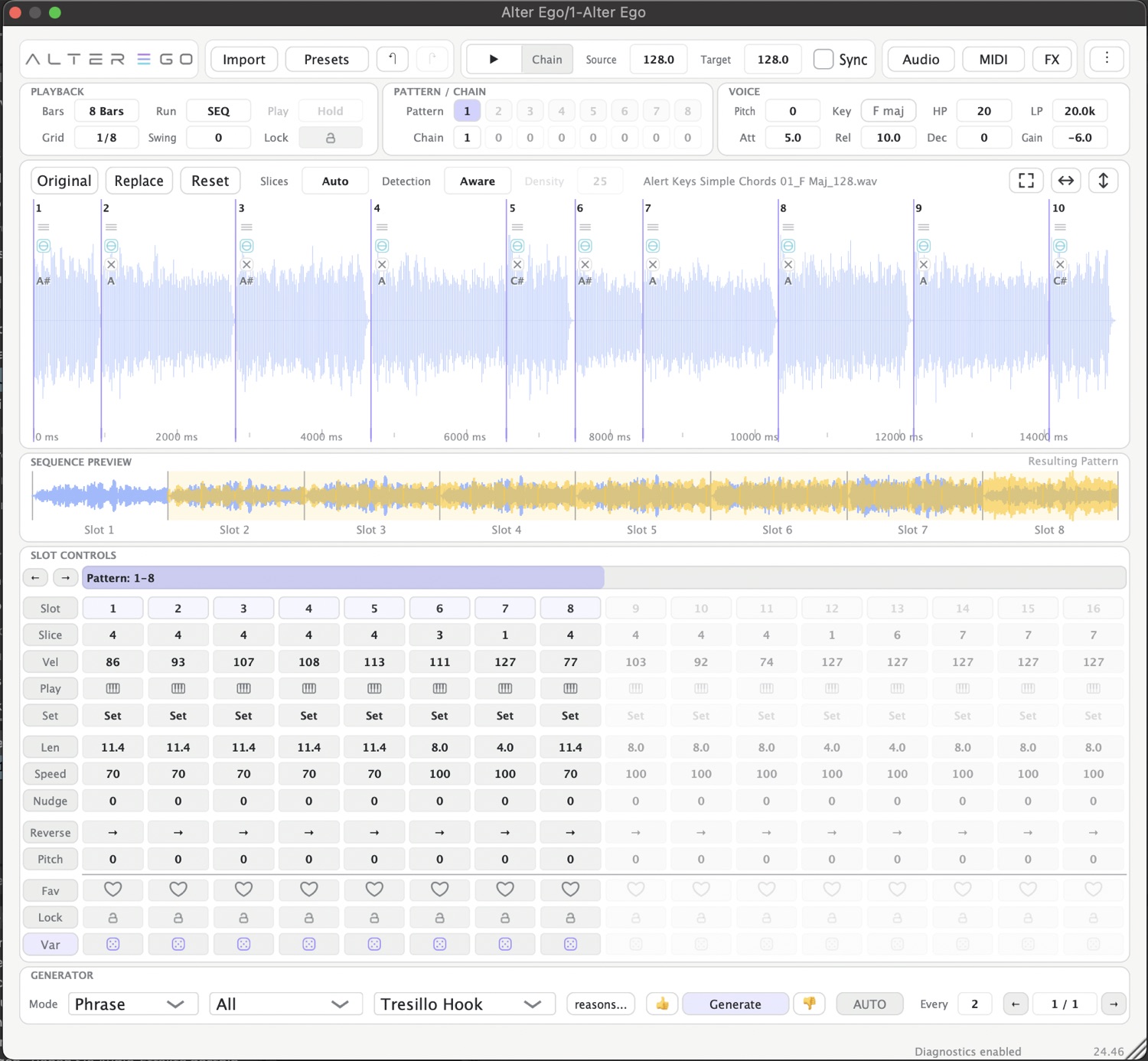
A new name, a logo, a look of its own. For the first time it resembles an instrument and not a prototype.
It still does not know what it is for.
A pattern is taken out of one loop and put onto the sounds of another. The plugin stops inventing music and starts moving a performance.
This is the idea.
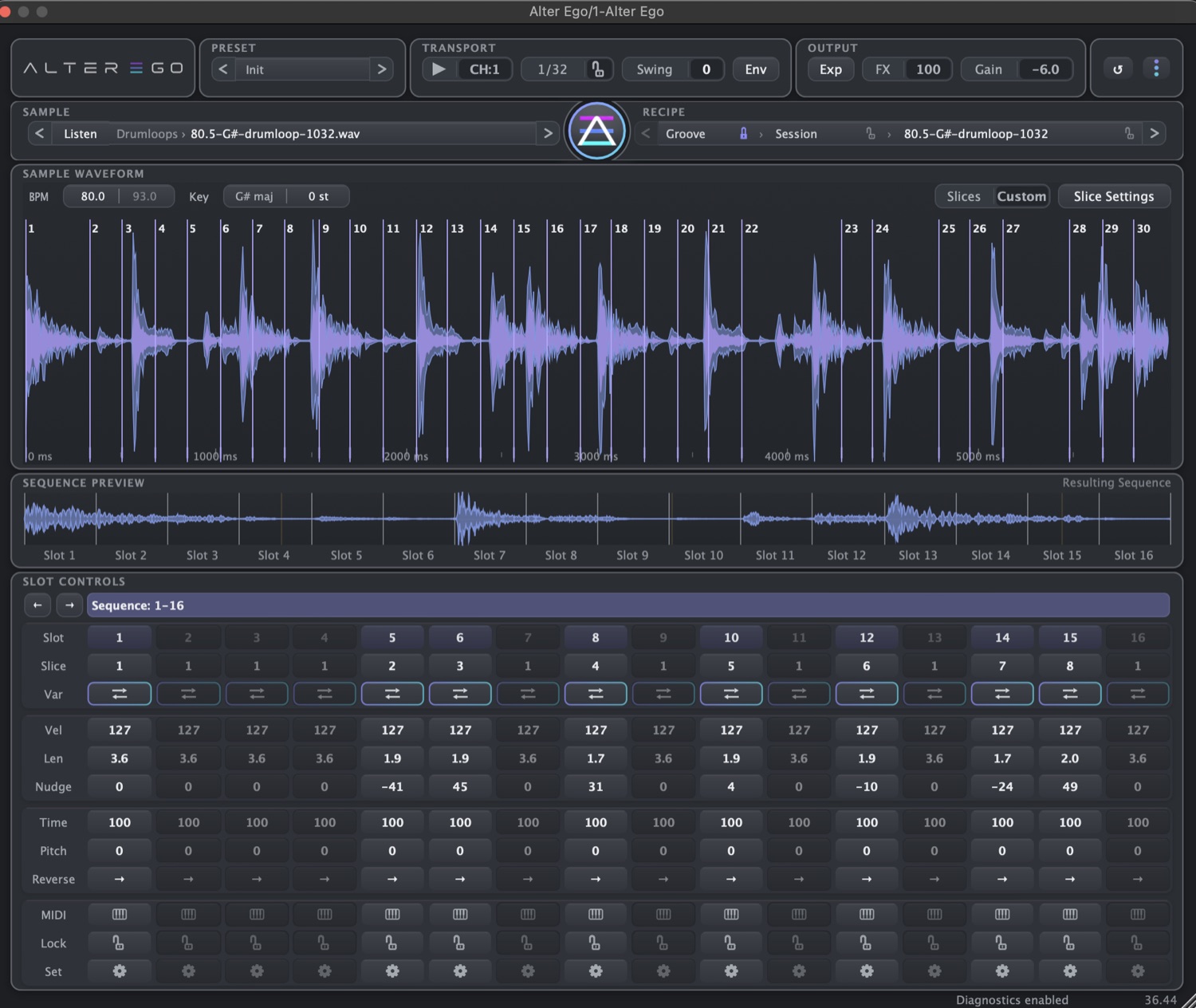
"Alter Ego" turns out to be taken. The new name is the verb the plugin has been doing for a month. Its description changes from slice sequencer to performance transfer sampler.
The name fits the idea.
I had been building what I knew: a step sequencer with slots, the way such plugins are laid out. That layout was limiting everything — how many things can sound at once, how many can be read at once. And nothing forced me to keep it.
So the slot matrix, the centre of the thing since day one, goes. In its place: a sampler and a piano roll. Free events, any length, any timing.
A new architecture.
That is how hand-written rules read one ordinary drum loop. Every new rule breaks a different loop. A network trained for the job takes over the reading.
From rules to listening.
For a long time the reading was measured against target numbers of our own. The numbers improved; whether the result was good remained an open question.
Then the goal changes: put it next to what already exists, on the same loops, and be better than that.
The result is on the Proof page.
The window is rebuilt: sample on top, reading in the middle, performance below. The same day work starts on the melodic half: reading notes, chords and key.
In progress.
Since 18 May 2026. 822 of them in August.
All have to pass before a version goes out.
From the first reading net to today.